Is Brain Strain a Hidden Cost of Hearing Loss?
Get the Facts to Help Protect Your Cognitive Health Your brain plays a

By: admin | May 27, 2026
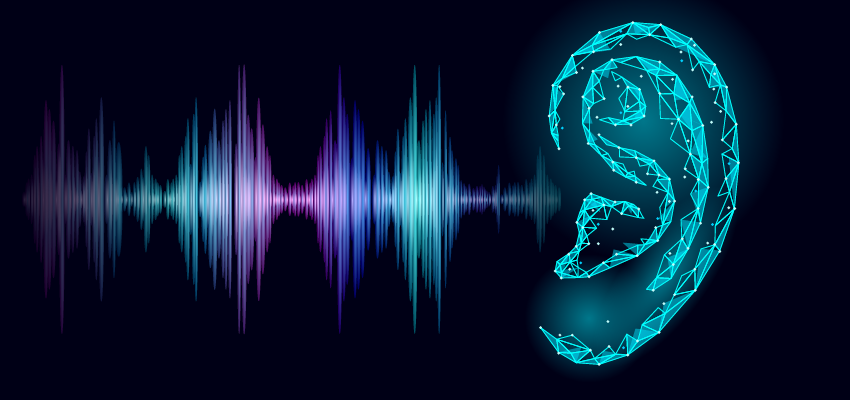
Imagine gathering with friends in a lively cafe. Voices overlap, cutlery clinks, music plays in the background. For many people with hearing loss, scenes like this are not just challenging, they’re exhausting. The difficulty isn’t simply hearing sound; it’s managing the mental effort required to understand speech amid noise. Traditional hearing aids make sound louder, but they don’t yet fully address the cognitive workload that listening demands. What if the next generation of hearing aids could do more than amplify sound? What if they could actually sense your mental state and adapt in real time?
Researchers and technologists are exploring exactly that: hearing aids that listen back to the user’s brain and physiology to improve clarity, reduce fatigue, and enhance real-world communication. This promising direction could redefine what it means to “hear better.”
When sound enters the ear, it’s only the first step. The brain must decode that input, separate important signals (like speech) from background noise, and allocate mental resources to follow meaning. For someone with hearing loss, this cognitive processing can become significantly more effortful. Studies show that listening effort reflects not just the physical hearing of sounds but also the cognitive demand placed on working memory and attention systems. This is a process that can be measured physiologically, such as through pupil response or brain waves.
Hearing aids are essential tools for restoring audibility, but current devices generally adjust only to external acoustics — for example, distinguishing quiet rooms from noisy restaurants. They don’t yet read how hard your brain is working. That’s the gap researchers want to fill.
Two cutting-edge approaches are poised to bring internal listener states into hearing aid adaptation: EEG (electroencephalography) and pupillometry.
EEG: Tuning in to brain waves
EEG captures electrical activity from the brain and provides real-time indicators of attention and listening effort. While traditional EEG requires cumbersome equipment, newer systems are being designed to sit unobtrusively around or inside the ear. These “ear-EEG” sensors can detect neural responses that reflect how well someone is following speech or where their auditory focus lies.
This is more than a lab experiment: Researchers have shown that EEG patterns contain information about which speaker a person is attending to in complex sound environments. Advanced decoding algorithms can interpret these signals in real time, offering a pathway toward neuro-steered hearing devices that adjust based on cognitive focus rather than just environmental noise.
In principle, a hearing aid equipped with EEG feedback could detect when the brain’s engagement with a conversation decreases — even if background noise hasn’t changed — and respond by narrowing microphone directionality, enhancing speech clarity, or switching processing modes that reduce listening effort.
Pupillometry: Your eyes reveal listening strain
Another promising physiological signal comes from the eyes. Pupillometry measures changes in pupil diameter that occur not just in response to light but also in response to cognitive load. When the brain is working hard (such as trying to follow speech in noise), pupils dilate proportionally. This task-evoked pupillary response serves as an objective indicator of listening effort.
In hearing-science research, pupillometry is increasingly used to quantify how demanding a listening task is, such as following speech in a challenging environment. Some hearing technology developers are integrating pupil measurements into evaluations of how well devices reduce cognitive load during real conversations.
While embedding eye-tracking hardware directly into hearing aids remains technically challenging due to space and power constraints, hybrid systems (such as pairing smart glasses with hearing devices) could provide a bridge. In such setups, eye tracking could inform hearing aid adjustments, turning visual indicators of strain into real-time audio-processing decisions.
These innovations are not about futuristic gadgets, they’re about real, measurable benefits:
Moreover, research consistently suggests that lowering listening effort has broader health implications. Hard listening is not just tiring, it can contribute to emotional stress, social isolation, and long-term cognitive strain if left unaddressed. Hearing devices that reduce effort may play a role in supporting overall brain health by mitigating unnecessary cognitive load.
Today’s hearing aid advancements already include powerful features: adaptive noise suppression, artificial intelligence that recognizes environments, and Bluetooth® connectivity that enhances usability. But the next generation could turn these devices into responsive partners, not just sound processors.
The idea that hearing aids will one day react to your internal state (as well as the external world) is supported by both neuroscience and audiology research. EEG in conjunction with hearing aid processing is already being prototyped in research settings. Pupillometry provides another independent cue for how hard your brain is working.
These developments reflect a broader shift in hearing care: from focusing solely on audibility to prioritizing listening quality and cognitive ease. As the field moves forward, clinicians, technologists, and researchers are all contributing to the vision of devices that truly listen back.
What can someone with hearing loss expect in the coming years?
Importantly, these innovations do not replace the expertise of audiologists and hearing professionals — they enhance it. Clinical fitting, personalized adjustment, and ongoing support remain essential to successful outcomes.
The Future of Hearing Care
“Hearing aids that listen back” represent a promising paradigm shift in auditory care. Rather than responding only to sound, these emerging devices aim to respond to you. They aim to respond to your brain, your effort, your real-world communication needs, and more. By tapping into physiological signals like brain activity and pupil responses, they could significantly reduce listening strain and help wearers engage more fully with the world around them.
This evolution reflects not just a technological advance, but a deeper understanding: that hearing is not just a sensory experience, it’s a cognitive one too.
If you’re curious about how new technologies can support your listening goals, Contact us to schedule a hearing evaluation and talk with our board-certified Doctors of Audiology about features that reduce listening effort today, and stay informed about innovations on the horizon. The future of hearing care is not just louder — it’s smarter and more empathetic.
Get the Facts to Help Protect Your Cognitive Health Your brain plays a
By: admin | September 16, 2026

Here’s how caring for your hearing can help support your overall
By: admin | September 2, 2026

Personalized Hearing Care for the Way You Live Hearing loss is personal,
By: admin | August 19, 2026